What is review gating, and is it allowed on Google?
Insights Reviews 4 min read
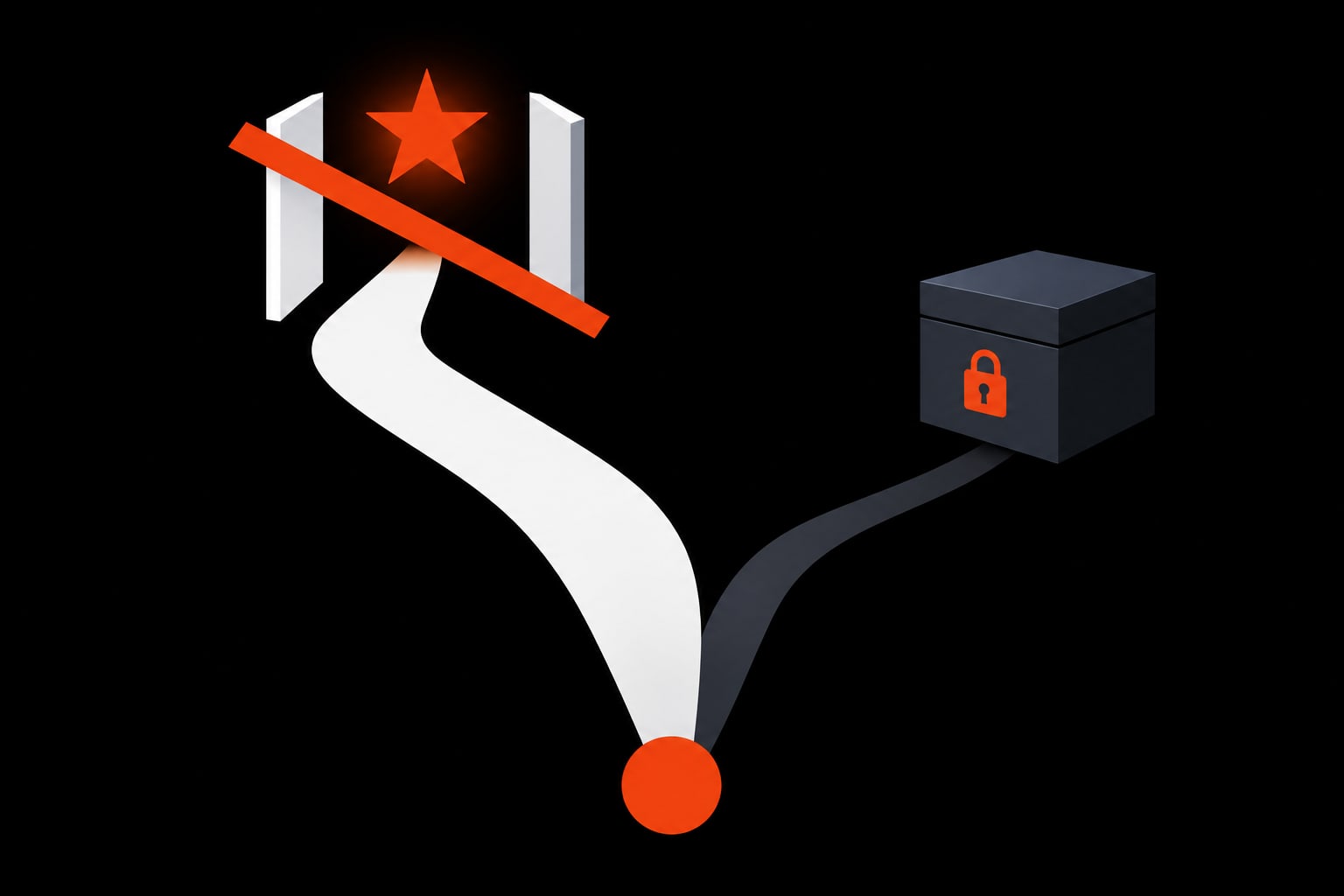
Review gating is asking customers how their experience went, then sending only the happy ones on to Google and steering the unhappy ones somewhere private. It is not allowed on Google: its content policy says businesses may not "discourage or prohibit negative reviews, or selectively solicit positive reviews from customers."
What review gating looks like in practice
The customer gets a message after the job: "How did we do?" with one to five stars. Tap four or five and the next screen says "Great, would you share that on Google?" with a link. Tap one, two or three and the next screen says "Sorry to hear that, tell us privately what went wrong" and there is no Google link at all.
The effect is that unhappy customers are routed away from the public page before they get there. The rating goes up, but it no longer reflects the business. That is exactly why Google does not allow it.
What Google's policy says
Google's prohibited and restricted content policy for Maps lists what businesses may not do when it comes to reviews. Among them:
- Offer incentives, such as payment, discounts, free goods or services, in exchange for posting a review or changing or removing a negative one.
- Discourage or prohibit negative reviews, or selectively solicit positive reviews from customers.
- Require or pressure people to leave ratings or reviews while on the premises, or request that specific content be included.
In April 2026 Google added two more lines under the same heading: businesses may not ask staff to collect a set number of reviews, or reviews that include specific content, including content that names a staff member.
The same page says what is allowed: soliciting or encouraging reviews that represent a genuine experience, without offering incentives and without trying to influence the rating or the contents.
Where the FTC comes in
The Federal Trade Commission's rule on the use of consumer reviews and testimonials has applied since October 2024. It does not use the word gating, but it covers practices that sit next to it. It treats as unfair or deceptive:
- Offering compensation or incentives conditioned on a review expressing a particular sentiment, positive or negative (section 465.4).
- Suppressing reviews on your own website based on their rating or negative sentiment while presenting what is left as most or all of your reviews (section 465.7).
- Using unfounded legal threats, intimidation or false public accusations to stop a review being written or to get one removed (also section 465.7).
What to do instead
Ask everyone the same way. That is the whole alternative, and it is simpler than gating, not harder:
- Send every customer the same ask after the job, with the same link. Templates are in how to ask customers for reviews.
- If you want private feedback first, collect it, and then show everyone the review link regardless of their answer.
- Use the private feedback for what it is good at: calling an unhappy customer the same day, while there is still time to fix it.
- Reply to the bad reviews that do arrive. There is a guide to responding to negative Google reviews.
A few low ratings among many honest ones do less harm than people fear. The Google review calculator shows how many 5-star reviews it takes to balance one at your rating.
How we handle it
Our Google review management service asks "how did we do?" first so you hear about a problem before anyone else does. Then every customer who answers is shown the Google review link, whatever rating they gave. A low rating sends you an alert so you can call them. It never decides who gets asked. The full flow, step by step, is on how our review requests work.
Ask every customer without having to remember
The Reviews plan sends the ask a few hours after each finished job, by text or email, and gives every customer the same link to Google. $197 a month, no contract, and most businesses are live in three to seven days.
Related questions
- Is review gating illegal?
- Google's rule against it is a platform policy, not a law, and breaking it risks your reviews and your profile rather than a fine from Google. The FTC's review rule covers related practices, such as incentives tied to a positive review and suppressing negative reviews shown on your own website. If you need a legal answer for your situation, ask a lawyer.
- Is it gating to collect private feedback first?
- Not on its own. Asking 'how did we do?' is fine. It becomes gating when the answer decides who is asked to post publicly. If everyone gets the same review link afterwards, whatever they said, nobody is being filtered.
- What happens if Google decides a business is gating?
- Google's help pages say it removes content that breaks its policies, and that businesses violating its fake engagement policy may have restrictions placed on their profile, such as not being able to receive new reviews for a set period, or a warning shown to people who view the profile.
- How do I check whether my review software gates?
- Send yourself a request and answer it with one or two stars. If the Google link disappears and you only get a private feedback form, the tool is gating on your behalf, and it is your profile that carries the risk.