How to set up conditional call forwarding (codes by carrier)
Insights Getting started 6 min read
Conditional call forwarding sends a call to another number only when you do not answer, your line is busy or your phone is off, and your own number stays exactly where it is. You set it up by dialing a short code on the phone itself, and the codes below come from each carrier's own support page.
What conditional call forwarding is
Your phone rings. If you pick up, nothing else happens. If you do not, the call carries on to a second number you chose, and the caller hears ringing the whole time. That is conditional forwarding: the call only moves when a condition is met.
It is different from the forwarding most people know, where every call skips your phone and goes straight to the other number. For a business that is the wrong tool, because you still want to answer when you can. You just want the ones you cannot answer to go somewhere better than voicemail.
Where they go is up to you: a second person, an office line, after-hours call answering, or an AI receptionist. The forwarding is the same either way. If the reason you miss calls is that you are on the tools, our page on answering business calls when you're busy on a job covers what to forward to.
Busy, no answer, unreachable
Carriers split "you did not answer" into three conditions, and each one can be set separately.
- Busy: you are already on a call. Without forwarding, the second caller goes to voicemail while you are talking to the first.
- No answer: the phone rang and nobody picked up. Most carriers let you set how long it rings first, and a short delay is the difference between a caller who waits and one who hangs up.
- Unreachable: the phone is off, in airplane mode, or out of signal. A basement, a crawl space, or the far side of a job site.
For a service business, set all three to the same number. A missed call is a missed call whichever way it was missed.
Codes for Verizon, AT&T and T-Mobile
Dial these on the phone whose calls you want to forward, as if you were making a call. Each row links the carrier page it was read from on September 28, 2026; check that page before you dial, because carriers do change them.
| Carrier | Condition | Turn on | Turn off |
|---|---|---|---|
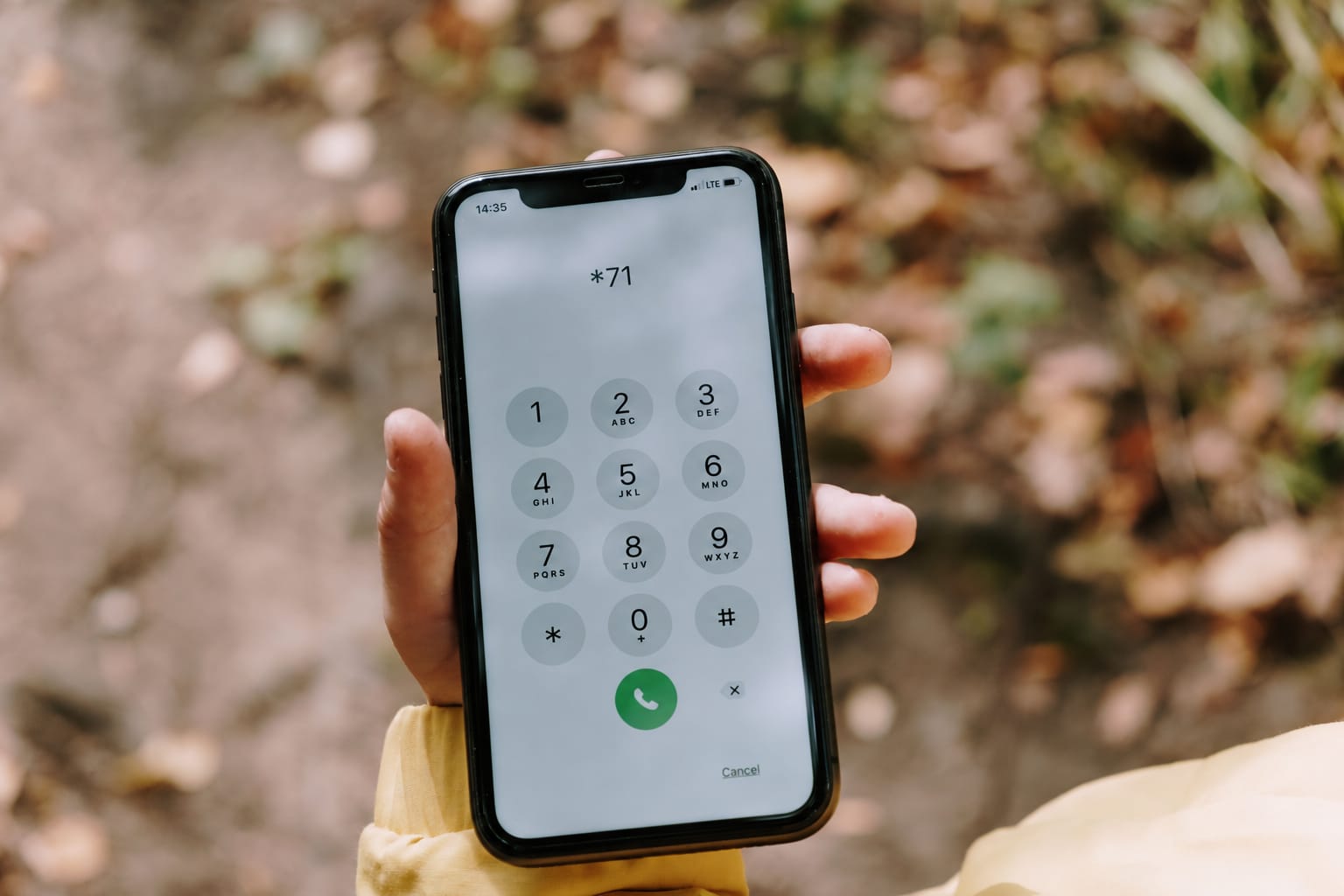
| Verizon | No answer (calls you do not pick up) | *71 then the 10-digit number | *73 |
| Verizon | All calls | *72 then the 10-digit number | *73 |
| T-Mobile | No reply | **61*1 then the number, then # | ##61# |
| T-Mobile | Busy | **67*1 then the number, then # | ##67# |
| T-Mobile | Not reachable | **62*1 then the number, then # | ##62# |
| T-Mobile | All calls | **21*1 then the number, then # | ##21# (or ##004# to reset all forwarding) |
AT&T has no row because AT&T's wireless support page publishes no codes. It says forwarding is set from the phone itself, cannot be managed online, and points to its device tutorials, so on AT&T use the phone's own call settings and run the test below.
Two things the other pages say that are easy to miss. Verizon's page lists *71 for unanswered calls and *72 for all calls, and does not list separate busy or unreachable codes. T-Mobile's page lets you set the ring time before a no-reply call forwards, from 5 to 30 seconds, by adding two asterisks and the seconds before the final # on the no-reply code.
Landlines and VoIP phone systems
An office landline usually has its own forwarding codes from the phone company, and a VoIP system (the kind with an admin login) has forwarding settings in that login rather than on the handset. Look for "forward on no answer" or "forward when busy" in the call-handling section, and set the ring count there.
We are not listing landline or VoIP codes here because they vary by provider and the wrong code on a business line can forward everything. Use your provider's page, and run the test below before you rely on it.
Test it in two minutes
- Dial the code for no answer with the number you want to forward to.
- From a second phone, call your business number and let it ring out.
- Confirm it lands on the forwarding number and that whoever answers says your business name.
- For busy: be on a call, then call yourself from the second phone. For unreachable: put the phone in airplane mode and call it.
If the second phone hears voicemail instead, the code did not take. Dial the turn-off code, then try again, and check the carrier page for a note about your plan.

How to turn it off
Use the turn-off code in the table on the same phone. On T-Mobile, ##004# resets every kind of forwarding to the default in one dial, which is the quickest way out if you are not sure which conditions you set. On Verizon, *73 turns forwarding off and the page says you should hear a confirmation tone or message.
Turning it off is worth practising once, because you will want it the day the forwarding target changes.
Why forwarding beats porting your number
Some services ask you to move your number to them. Then the number lives with the service, every call goes through them first, and leaving means moving it again.
Forwarding keeps the number with you. Your phone still rings first, the service only sees the calls you miss, and if you stop using them you dial one code and it is over. That is how we set up missed-call text-back: you dial the forwarding code on your business phone, and the number stays yours. Our article on keeping your phone number with an answering service goes through the porting question in full, and if you are working out whether the missed calls are worth all this, start with what missed calls cost a service business or, if you are in the trade, our page on HVAC missed calls.
The fastest way to find out
Call (888) 997-6457 and talk to ours. It is the same assistant we build for customers, answering our own phone. Judge it yourself rather than taking our word for it.
Or just ask us.
Type it or say it. We reply by email or text, usually within one business day.
Trouble loading the form? Email [email protected].
Related questions
- What is the difference between call forwarding and conditional call forwarding?
- Plain call forwarding sends every call to the other number and your phone never rings. Conditional forwarding lets your phone ring first and only sends the call on if you do not pick up, you are already on a call, or the phone is off or out of signal. For a business, conditional is almost always the one you want.
- What is the code for conditional call forwarding?
- It depends on the carrier. On Verizon it is *71 followed by the ten-digit number, for calls you do not answer. On T-Mobile it is **61*1 followed by the number and # for no answer, with separate codes for busy and unreachable. AT&T's wireless page does not publish codes and says to set it from the phone's own settings. The table on this page links each carrier's page.
- Will callers know their call was forwarded?
- No. They hear normal ringing and then whoever answers at the other end. That is why the number you forward to should answer with your business name, whether it is a person, an answering service or an assistant.
- Does conditional call forwarding change my phone number?
- No. Your number stays on your trucks, your website and your Google listing, and calls still come to your phone first. Only the calls you miss travel on. That is also why forwarding is safer than porting your number to a service, which we cover in a separate article.