How to answer business calls when you're busy on a job
Insights Missed calls 6 min read
The way to answer business calls when you're busy on a job is not to answer them yourself. Forward only the calls you miss to something that picks up, sorts the real jobs from the junk, and sends you one summary instead of a pile of messages, so the callback you make from the truck is to someone who is still waiting.
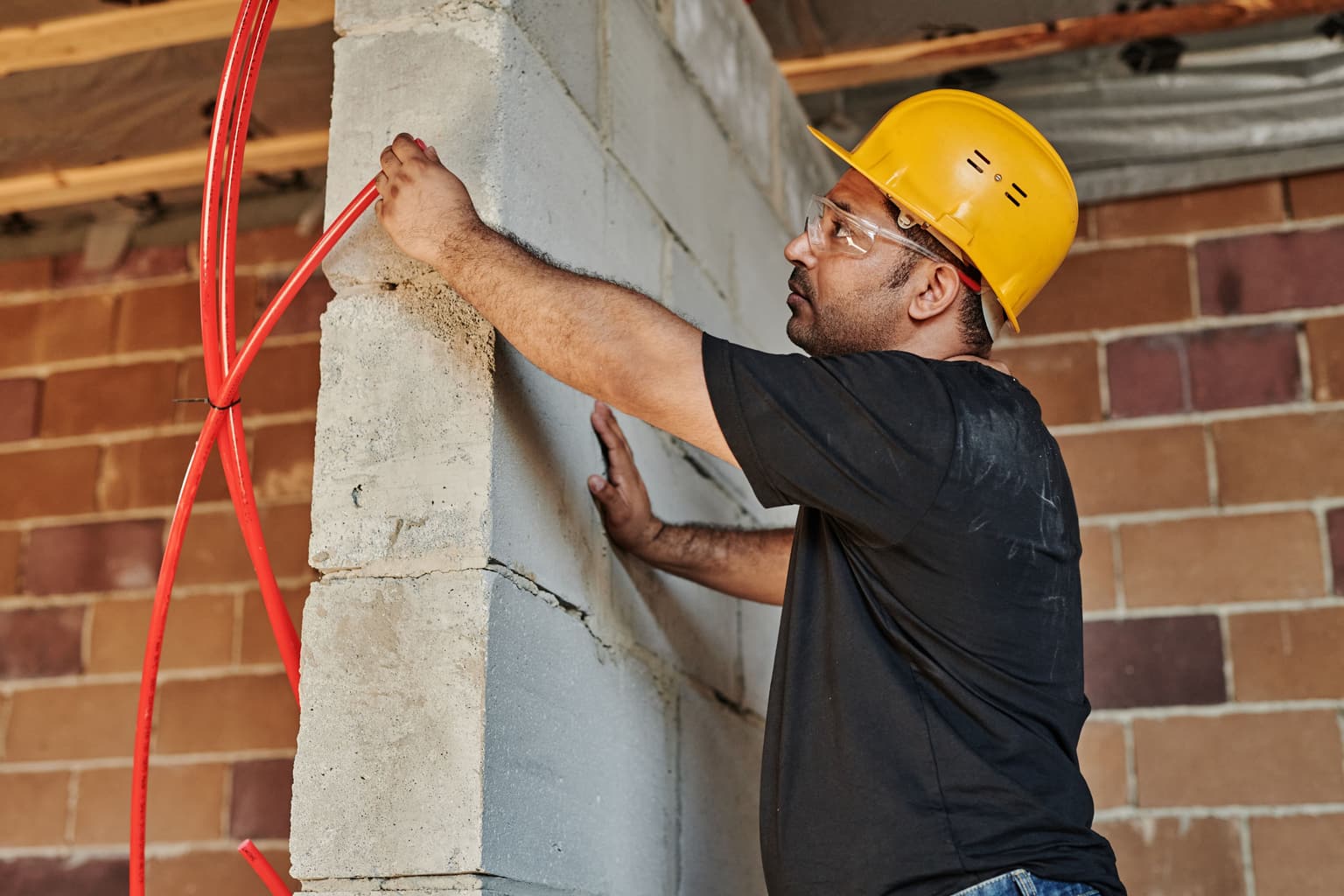
The call that comes in when you're elbow deep
An electrician on r/electricians: "Nothing worse than being elbow deep in a panel, phone buzzing, and knowing you can't answer. I lost a lot of jobs that way."
Another, on r/AskElectricians, on what happens next: "I get a lot of calls while working which I miss but by the time I call back most people have already hired someone else. No one uses voicemail anymore so it's not a solution and from my research answering services are too expensive for what they are, cause you still gotta call everyone back."
Read that second one again, because it is the whole problem in three parts. The call comes when you cannot take it. The callback is too late. And the fixes you have looked at either do not catch the caller or leave you with the same callbacks. Our pillar on what missed calls cost a service business puts a number on the first part. This page is about the other two.
Five ways owners handle it
Every trade forum has the same thread, and the answers sort into five.
- A spouse or family member on call forwarding. Free, and it works until the caller asks a question about the job, which the person answering cannot quote or schedule.
- Voicemail. Catches the callers who were going to wait anyway, which in the trades is the smallest group.
- A human answering service. It picks up. One owner on ElectricianTalk: "I've tried the answering service thing. I like the service but it got very expensive since we were being charged per call. On top of that it left me hours of messages to sift through."
- A text back to every missed call. Cheap, works from the truck, and catches the people who will not leave a voicemail but will answer a text. Our missed call text back examples show what to send.
- An AI receptionist that answers, asks the job questions and sends you a summary. The worry is that callers hang up on it, and one owner's trial in Australia found exactly that when the assistant left "dead silence between when you finished talking and waiting for it to respond". The ones worth using do not do that; call one before you trust it.
Most owners who have fixed this use two of the five: forwarding to something that answers, plus a text back for the calls that still get through to nobody.

Sort the job calls from the junk
Half the reason owners put up with missed calls is that half the calls are junk. Telemarketers, price shoppers, a supplier, someone who wants a free diagnosis over the phone. Calling those back is a waste of the lunch break.
So whatever answers has to sort. A one-man shop on ElectricianTalk described what he would want a service to do: "get basic information down ... And decline or toss away the chaff (about 20% of my calls), as well as the spam (I stopped counting%). Then I get an email with the full details and call log."
Write the sorting questions down. Is this a repair or a new install. What is the address. Is anything unsafe right now. When do you need it done. Have you had a quote from anyone else. Five questions, asked the same way every time, turn a list of numbers into a list of jobs with the junk already out.
Forward only the calls you miss
You do not have to hand your phone over to fix this. Conditional call forwarding sends a call on only when you do not answer, your line is busy or your phone is out of signal (a crawl space counts). Your number stays on the truck and the website, your phone still rings first, and the calls you miss go somewhere that answers.
The codes are on the carriers' own pages, and our guide to conditional call forwarding lists them and shows the two-minute test. It also answers the objection every owner has about putting anything between them and the customer: with forwarding, nothing is between you. You still answer when you can.
Get a summary, not a pile of messages
The owner in the quote above liked his answering service and stopped using it because of the hours of messages. A service that takes messages leaves you the callbacks. A service that takes jobs does not.
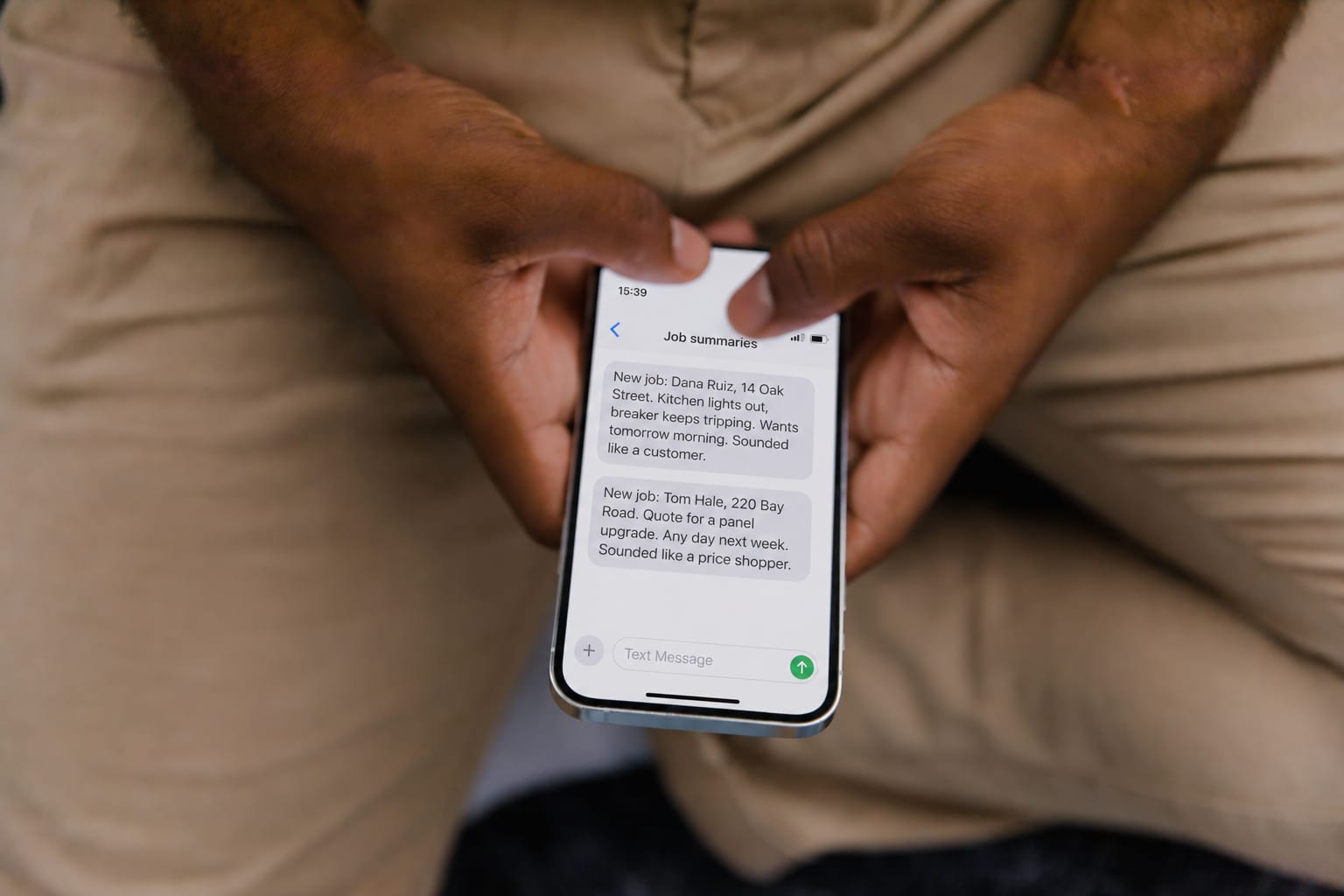
What you want at the end of the day is one text or one email per real job: name, address, what is wrong, when they need it, and whether they sounded like a customer or a price shopper. Not a name and a number with "please call back", which is what you had with voicemail. Our electrician answering service is built to send that summary, and the same setup runs the plumber answering service and the HVAC answering service; the other trades we set it up for are listed under industries.
When you do call back
With the junk sorted and the details taken, the callback changes. You are ringing someone who has already been answered, told when to expect you, and asked the job questions. You open with the job, not with "you called earlier?"
Do it from the truck between jobs, in the order the summary suggests: the emergencies first, the quotes with a date attached second, the maybes at the end of the day. And notice how many of them are still waiting for you. That number, against what it used to be, is the whole point.
If you are in HVAC, the busy-season version of this problem has its own page on HVAC missed calls, and the missed call calculator will tell you what the calls you are still missing are worth.
The fastest way to find out
Call (888) 997-6457 and talk to ours. It is the same assistant we build for customers, answering our own phone. Judge it yourself rather than taking our word for it.
Or just ask us.
Type it or say it. We reply by email or text, usually within one business day.
Trouble loading the form? Email [email protected].
Related questions
- How do contractors handle phone calls while working?
- Most of them badly, by their own account: they let it ring, call back at lunch or after the job, and find the caller has hired someone else. The owners who have solved it forward the unanswered calls to a person or an assistant that takes the details, and call back only the ones worth calling back.
- Should I answer my business phone on a job site?
- Not with your hands in a panel or under a sink, and not in front of a customer you are already working for. Answering every call yourself costs you the job you are on and still misses the calls that come while you are talking. Set up something that answers when you cannot, and keep the decision about who gets a callback.
- Do answering services work for electricians and plumbers?
- They pick up, which is the main thing. The complaints owners report are the per-call bill in a busy month and the pile of messages that still has to be called back. A service earns its cost when it sorts the calls, takes the job details and sends a summary, rather than a list of names and numbers.
- What is the least expensive way to stop missing calls on a job?
- Conditional call forwarding to a second phone is free, and a text sent back to every missed call is close to it. Both are covered on this site. They stop working the day the second phone is busy too, which is when a service or an assistant starts to pay for itself.