HVAC missed calls: where they go and how to catch them
Insights Missed calls 6 min read
HVAC missed calls go to the next company on the list, because a caller with no cooling does not wait for a callback. Catching them is three steps: sort emergencies from routine calls before anyone calls back, forward only the calls you miss, and text the ones you still cannot pick up.
When HVAC calls get missed
Every trade misses calls. HVAC misses them in a pattern, and the pattern is the problem.
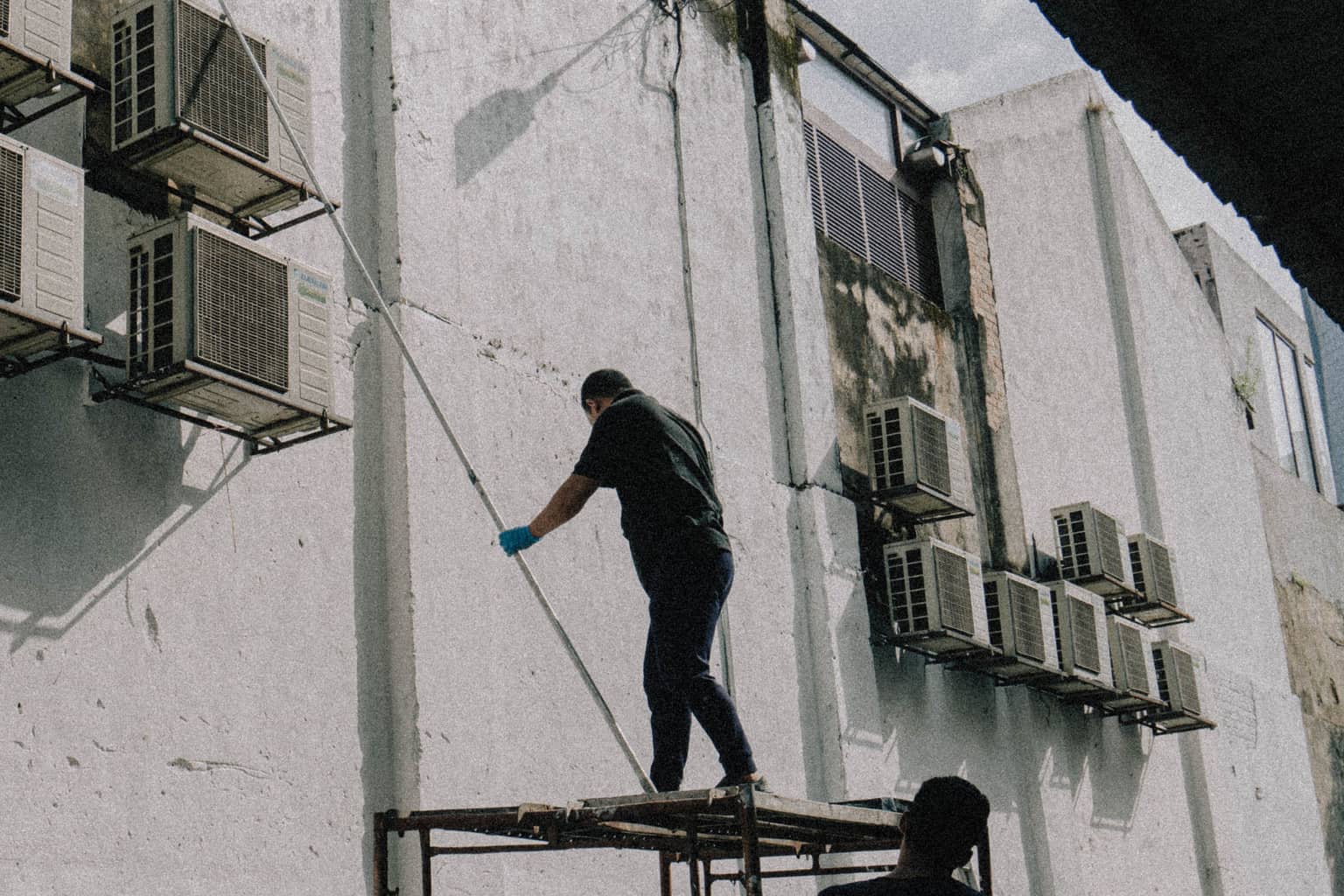
The calls come in bunches on the first hot afternoon of the summer and the first cold night of the winter. That is the same afternoon every tech is on a roof with both hands on a condenser and the same night the on-call phone is in a truck on the other side of town. The quiet weeks, when someone could answer, are the weeks nobody calls.
Then there is the second ring. A tech climbs down, sees the missed call and calls back twenty minutes later. In a slow month that is fine. In July the caller has already talked to someone else.
What a caller with no cooling does next
Put yourself in the kitchen. It is 91 degrees inside, the baby is red in the face, and the number you just dialed went to voicemail. You do not leave a message and wait. You go back to the search results and press the next number.
A contractor on ContractorTalk said it from the customer's side: "going to voice mail is a huge turn off, and even if I do leave a message, I'm calling someone else." The same thread has owners admitting they hang up on automated menus themselves.
So the missed call is rarely a delayed job. It is a job that went to whoever picked up, and unless they leave a voicemail you never find out it existed. Our pillar on what missed calls cost a service business walks through why the phone log undercounts them.
Emergency or routine: sorting calls before you call back
Here is the first of three steps, and it is the one most companies skip. Before you decide who answers the phone, decide what the calls are.
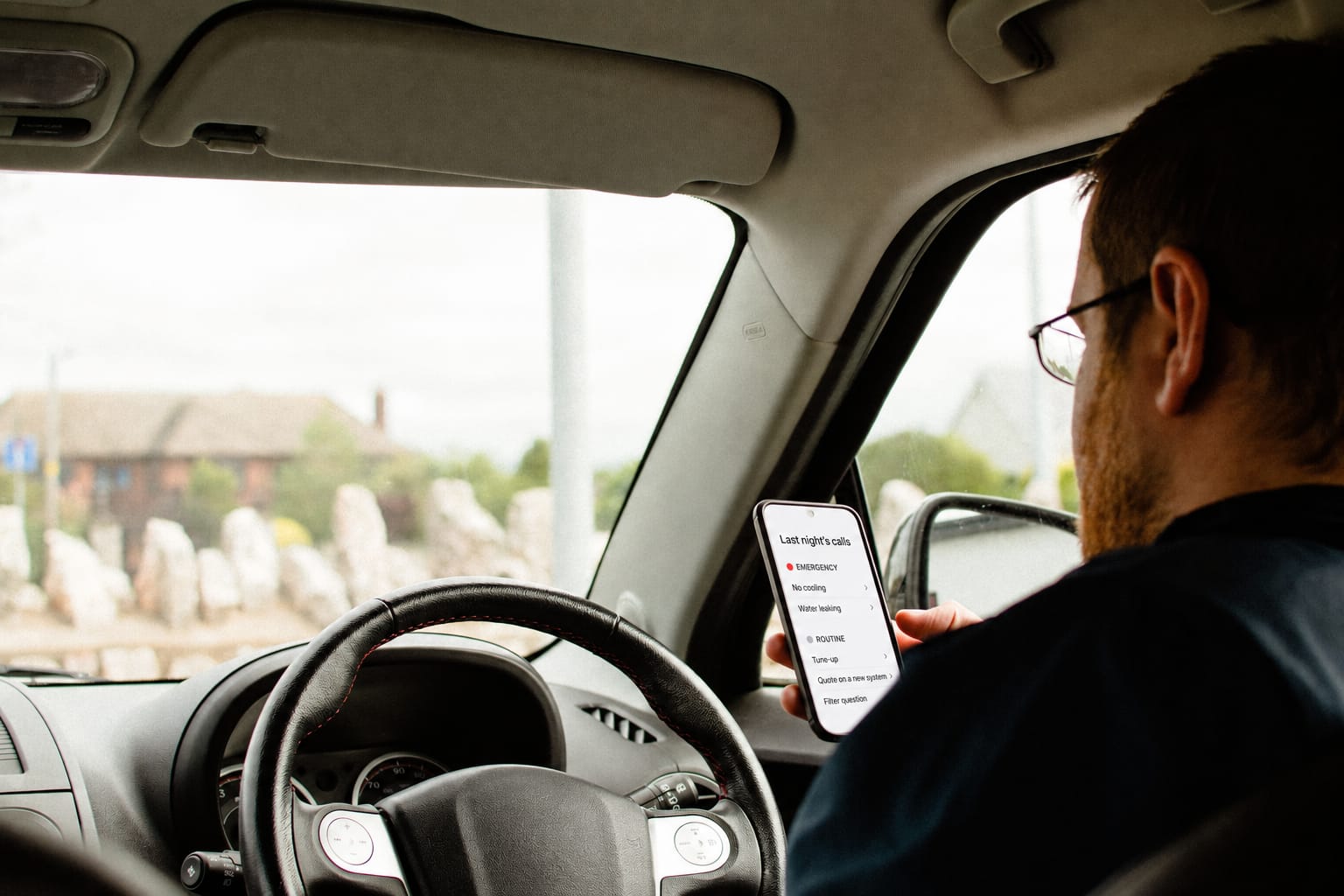
Pull up last month's calls and put each one in a lane. Emergency: no heat, no cooling, water where it should not be, a smell of gas, a vulnerable person in the house. Routine: a tune-up, a quote on a new system, a filter question, a duct cleaning, a warranty query, a supplier.
Most companies find the routine lane is far bigger than they expected, and that changes everything about the fix. A routine call can be answered by a text, a booking link or a morning callback without losing the job. An emergency cannot. Whatever answers your phone has to know the difference, and the way to teach it is a list of the questions that separate the two: is there any cooling at all, is anyone in the house unwell, is water leaking.
What one missed call is worth to you
Do not take a vendor's number for this. Take yours.
Look at your average ticket for a repair and your average sale on a replacement, and weight them by how often each kind of call comes in. Then count the calls you missed in your busiest week last summer and be honest about how many of them would have booked if you had answered. Multiply, and that is the weekly figure.
The missed call calculator does the arithmetic and shows it by the month and the year. Keep that number in front of you while you read the options, because it is the most you should ever pay to fix this.
Voicemail, answering service, text back or AI receptionist
Step two is forwarding only the calls you miss. Your number stays on the trucks and the website, and a call that rings out on the office phone rolls to wherever you choose. What it rolls to is the real decision.
Voicemail is where it rolls today, and the section above is what happens next. It costs nothing and it catches the callers who were going to wait anyway, which in HVAC is the smallest group.
A human answering service picks up and takes a message. A good one will ask your sorting questions and page the on-call tech. The bill usually runs by the minute or the call, so your worst heat wave is also your biggest invoice, and the message still needs calling back.
Text back is step three. The moment a call is missed, the caller gets a text with your name and one question. It is cheap, it works while every tech is on a roof, and it catches the people who will not leave a voicemail but will answer a text. Our missed call text back examples show what to send.
An AI receptionist answers the call, asks the sorting questions, books the routine work into your calendar and puts the emergency through. The worry every owner has is whether it sounds like a robot and costs you a big replacement job. That is a fair worry, and the answer is in our article on whether an AI receptionist sounds human: call one and listen before you trust it with a customer.
The done-for-you version of all three steps is our HVAC answering service, and the way it treats a missed call is written out on our HVAC missed-call recovery page.
After hours without waking the on-call tech for everything
The on-call phone is where good techs burn out. If every after-hours call rings it, the tech is up at 11 pm for a tune-up request, and by February nobody wants the rota.
Use the same two lanes at night. An emergency goes straight through to the on-call tech, with the address and the symptom already taken so the tech is not asking for a zip code half asleep. A routine call gets an honest answer: we are closed, we open at seven, and here is how to book a time now. Our after-hours message examples give you the wording, and after-hours call answering is the version where something answers and does the sorting for you.

What to set up this week
- Sort last month's calls into the two lanes and write down the three questions that separate them.
- Turn on conditional call forwarding on the office line, so only unanswered calls roll to a second phone or a service. Your number does not change.
- Put a text back on the missed calls, even a manual one from the truck at first, with your name and one question.
- Run your numbers in the calculator and decide whether the full fix is worth it before the next heat wave, not during it.
The fastest way to find out
Call (888) 997-6457 and talk to ours. It is the same assistant we build for customers, answering our own phone. Judge it yourself rather than taking our word for it.
Or just ask us.
Type it or say it. We reply by email or text, usually within one business day.
Trouble loading the form? Email [email protected].
Related questions
- Why do HVAC companies miss so many calls?
- Because the calls arrive in the same hours the techs are on the tools, and they bunch up on the first hot day and the first cold snap. A two-truck company has nobody at a desk, and a bigger one has a dispatcher on three lines at once. The busiest week of the year is the week the phone is least likely to be answered.
- Should an HVAC company answer the phone after hours?
- Yes, but not with a person for every call. Most after-hours calls are booking requests that can wait until morning; a few are a family with no heat in January. The line needs something that can tell the two apart, put the emergency through to the on-call tech and hold the rest with a promise of a morning call.
- What is missed call text back for HVAC?
- A text that goes to the caller within seconds of a call you did not pick up, with your company name and one question, such as whether it is a repair or a new-system quote. It starts the conversation before the caller dials the next company, and it works from a truck.
- Is an AI receptionist any good for an HVAC business?
- For the routine calls, yes: it can take the address, the symptom and the preferred time, book it, and text you a summary. The test that matters is whether it hands a real emergency to a person fast and whether it sounds natural enough that a caller with a big job does not hang up. Call one and judge it, ours included.