How to reduce missed calls at a dental office
Insights Missed calls 6 min read
To reduce missed calls at a dental office, start by measuring them from the phone system you already have, then take the confirmations and routine questions off the front desk so the person there can answer, and cover only the overflow and the after-hours booking requests with something that does not replace anyone.

Where dental office calls get missed
A dental office does not miss calls because nobody is there. It misses them because the one person who is there is doing three other jobs when the phone rings.
A front-desk coordinator wrote to DentistryIQ's troubleshooter column with the whole problem in two sentences: "I'm the only person at the front desk, and we average about 20 new patients a month. I am completely overwhelmed between the phones, insurance, breakdowns, and confirmations, and the doctor shows no sign of hiring anyone else."
Another letter to the same column names the moment the call is lost: "When we have multiple calls come into the practice at the same time, the team will not help me answer them." Two lines ring, a patient is at the counter checking out, and the second call, which is the new patient, goes to voicemail.
The American Dental Association's own practice guidance puts a range on what that costs: "Some practices lose as many as 30-50% of the initial contacts" from prospective patients, meaning first calls that never become a scheduled visit. Our pillar on what missed calls cost a service business shows how to turn that into a number for your practice.
Measure it first: your phone system already knows
Before you change anything, pull one report. Most practice phone systems will show you calls by hour, answered and unanswered, for the last month. If yours will not, the phone company can.
You are looking for three things. When the misses cluster (usually the first hour, lunch and the last hour, when the desk is busiest with people in the room). How many go to voicemail and how many of those leave a message. And how many are the same number calling twice, which is a patient who could not get through and tried again.
Then compare the answered new-patient calls with the new-patient visits that actually got scheduled. That gap is the ADA's number for your office, and it tells you whether the problem is calls not picked up or calls picked up and lost.
Take work off the front desk before adding people
The instinct is to add a person. The doctor in the letter above will not, and even where the budget exists, the desk is busy with things a person does not need to do.
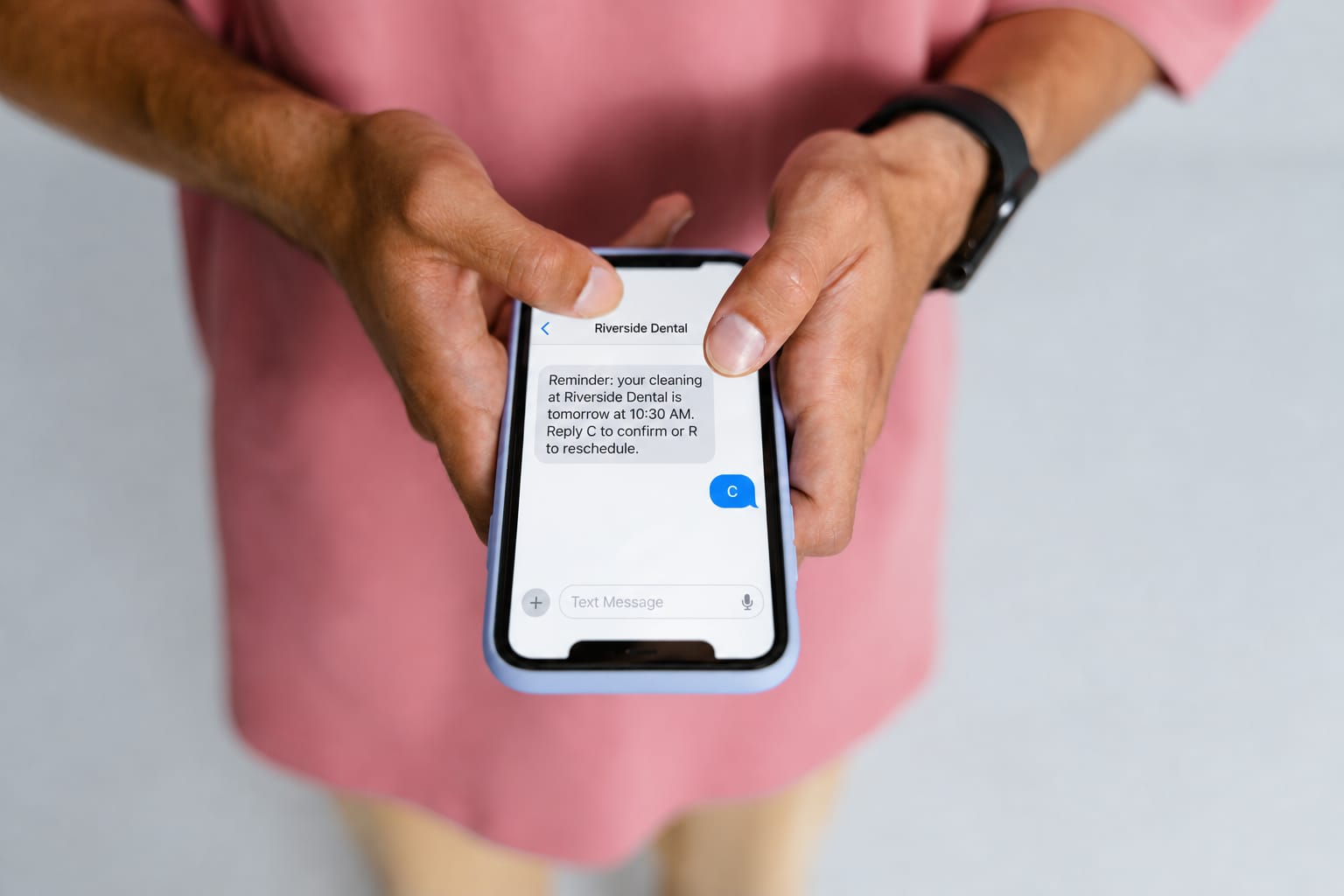
Confirmations are the first to go. A practice that moved them to text described the result on r/Dentistry: "we don't have to worry about calling 20 people a day to confirm appointments or worrying about missing calls when all the lines are tied up." Twenty outbound calls a day is twenty stretches where the inbound line is tied up.
Next, the questions that have the same answer every time: hours, parking, whether you take a plan, what a first visit involves. A chat assistant on the website answers those and books the request, so they never reach the phone. Ours is built for practices as an AI chat widget for dental websites, and the booking side is booking automation with confirmations and reminders by text.
What is left on the desk is the work that needs the desk: the patient at the counter, the insurance breakdown, the call from someone in pain. That is a job one person can do well.
Cover the overflow, not the whole desk
Even with the confirmations gone, two lines will ring at once during the morning rush. The fix is to forward the calls the desk cannot reach, not the calls it can.
Set the office line so that a call rolls after a few rings, or when the line is busy, to whatever answers your overflow. That can be a second staff member, an answering service, or an AI receptionist that takes the booking request, offers open times and texts you the summary. The desk still answers first. The caller who would have hit voicemail gets picked up.
A practice consultant on Dentaltown drew the line in the same place, recommending AI "for after-hours calls, overflow when the front is tied up, basic scheduling for existing patients, simple FAQs, but not as a full replacement for the front desk." That is the setup our dental answering service is built around, and the version that also answers the office line is the AI receptionist for dentists.

After hours: booking requests, not emergencies
Dentists on r/Dentistry describe after hours the same way. One owner: "Otherwise, they can leave a VM and get called back Monday morning. We have an emergency number from Google voice that routes to my cell phone." True emergencies are rare and already have a path. What piles up over a weekend is booking requests, and by Monday morning some of those patients have booked with the practice whose website let them.
So the after-hours job is booking, not triage. A message that says the emergency number and offers a way to book now covers most of it; our after-hours message examples include a dental version. An assistant that takes the booking request and confirms it covers the rest, and it should send anything that sounds clinical to the emergency path rather than trying to handle it.
What patients and staff will push back on
Be honest about the resistance, because it is real. A dentist on r/Dentistry: "I think it's a horrible idea. Especially for smaller, solo doc family practices. Patients want to talk to a human." Staff worry about being replaced. Patients, in the stories that circulate, hate repeating their name and birthdate to a system that cannot move on.
All three objections point at the same wrong setup: an assistant put in front of the desk instead of behind it. Keep the desk answering first, use the assistant for the calls that would otherwise go to voicemail, and give every caller a way to reach a person. Then call the assistant yourself and listen; our article on whether an AI receptionist sounds human is about what to listen for.
Tell the team what it is for before it goes live. An assistant that takes the Monday-morning voicemail pile off the coordinator is a different thing from one announced as a replacement, and the difference is in how you introduce it.
Patient information and the phone
Whatever answers your overflow and after-hours calls should stick to booking requests, hours, directions and general questions. It should not ask for health details, insurance ID numbers or anything about treatment, and it should say so to a caller who starts to offer them and hand the call to the practice instead.
That is how we set ours up, and the notice below is on every dental page we publish. If the phone is the first place a new patient meets your practice, the second place is usually your Google reviews, which is why the practices we work with pair the answering fix with getting more Google reviews from the patients they do see. The comparison of an answering service against voicemail is the next thing to read if you are choosing what answers the overflow.
The fastest way to find out
Call (888) 997-6457 and talk to ours. It is the same assistant we build for customers, answering our own phone. Judge it yourself rather than taking our word for it.
Or just ask us.
Type it or say it. We reply by email or text, usually within one business day.
Trouble loading the form? Email [email protected].
Related questions
- How many calls does a dental office miss?
- Your phone system knows and most vendors' percentages do not. The one figure worth quoting is the ADA's own guidance, which says some practices lose as many as 30 to 50 percent of initial contacts from prospective patients, meaning first calls that never become a scheduled visit. That includes calls that were answered badly, not only the ones nobody picked up.
- Should a dental office use an answering service?
- For the overflow and the hours the desk is closed, often yes. For the whole desk, usually no: the front desk knows the patients, the schedule and the doctor, and a service that replaces it loses that. The useful setup answers the calls the desk cannot reach and books the requests that can wait, then hands anything else to a person.
- Can an AI receptionist book dental appointments?
- It can take a booking request, offer open times and confirm by text for routine visits such as cleanings and check-ups, and it can answer hours, directions and general questions. It should not be asked for health details or insurance information, and a new-patient call that turns clinical should go to a person.
- What do patients think of AI answering at a dental office?
- The complaints dentists report are about being made to repeat a name and a birthdate to a system that cannot move on. Patients are less bothered by who answers than by whether the call goes anywhere. Test any assistant by calling it yourself, and keep a person one step away.